Showing posts with label crafts. Show all posts

Saturday, May 24, 2014

The fabric search

I had thought that one of the possible pleasures of travelling in the Cordillera region of the Philippines would be to see some of the weaving for which the region is known. Traditionally, both the women and men of the region wore either short wrapped skirts (women) or longer strips of elaborately tied fabrics (men) that were woven in colours and patterns that identified their ethnic affiliation. The fabric is densely woven on backstrap looms, usually in stripes with more complex inlaid borders.

We saw some of the weaving on our travels - but nothing that I admired enough to buy. I already have a stack of Philippine weaving that languishes on my shelves, bought over many years. Much of what I saw on this trip was, sadly, of lesser quality than the older cloths I already have and so there was little motivation to buy more (other than the desire to support local crafts - but I have to stop somewhere) . I guess this decline in quality is inevitable. As I wrote in my post on the rice terraces, people in these regions now have more knowledge of the world beyond their mountains and valleys and more options, whether real or imagined, for earning their living. Weaving is time-consuming and, like all handicrafts, brings few financial rewards for the time spent. As the traditional fabrics transition from items of everyday wear to souvenirs for tourists the imperative for weaving wanes and skills are lost.

We ended our mountain trip in Baguio, a rapidly growing city that in the early twentieth century was a 'hill station' for the American colonisers to escape the heat of Manila summers. It was a welcome escape for us too, from the hottest weeks of the Manila year. I went in search of the Narda's emporium - quite a Baguio institution. Narda Capuyan and her husband Wilson began their business just outside Baguio the 1970s - using the traditional weaving skills of local women to make fabrics they thought would be commercially marketable. Remarkably, they are still functioning more than forty years later. Their shop has a small selection of fabrics made in traditional weaves and patterns, some of them made into garments:
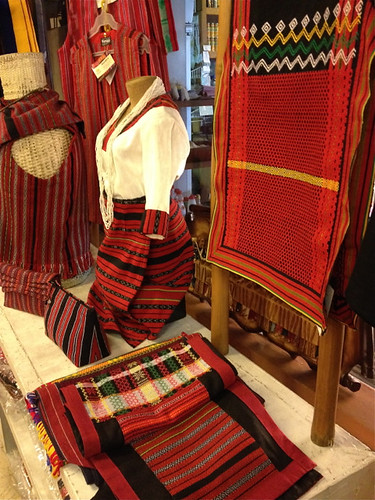
Baguio fabrics - Narda's

By the way, I love the photo of Narda herself on the website, dressed in a wonderful riot of local weaves. However,I think you'd have to be (a) tiny and (b) a Filipina to carry off this look successfully!

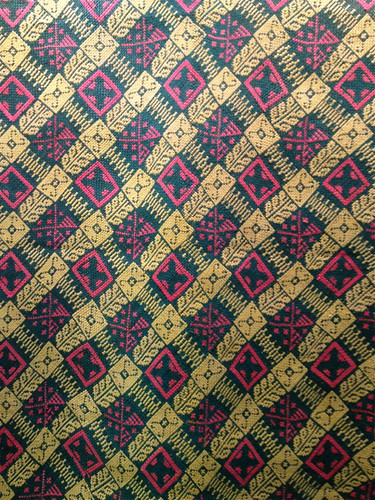
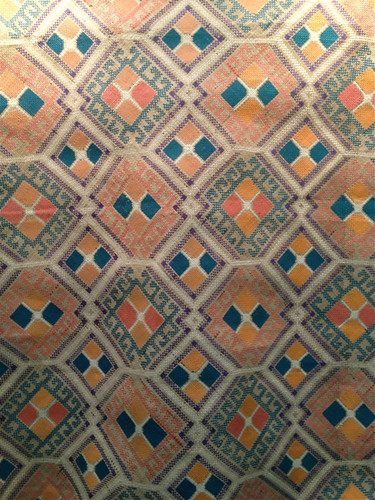
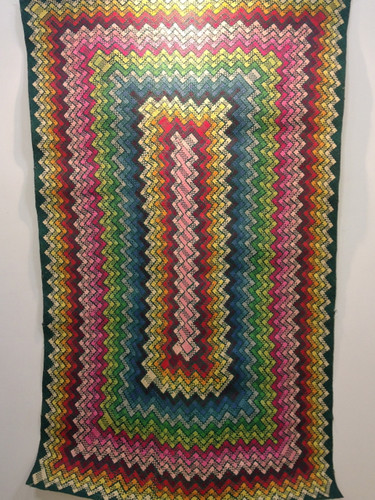
Most of the stock at Narda's is an adaptation of traditional weaving skills, patterns and colour combinations, many of them using ikat dying techniques:

Baguio - Narda's fabrics non-traditional

And to anticipate those of my commenters who will ask 'but what did you buy?' I was very restrained and bought three scarves - two of them for gifts and one to replace a much-used Narda's scarf I lost a couple of years ago:
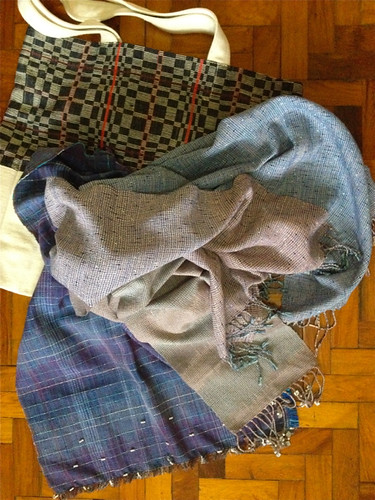
Baguio purchases

You can see I was rather taken by the scarves that had detailing of small pearls or shell beads. The carry-bag in the background of the photo of my purchases was not from Narda's but from the very sophisticated giftshop at the BenCab Museum. The checkered fabric in this bag is 'abel' and is from the coastal region of Ilocos that borders the mountains, where the use of floor looms rather than backstrap looms enabled different weaving techniques to be used.

Benedicto Reyes Cabrero, most commonly known as BenCab, has built a modern, light-filled museum with extensive gardens just outside Baguio with galleries for his own work, the work of other modern artists and, most interesting for me, an extensive and well-displayed collection of wood carvings that are such a rich artistic tradition for the Cordillera region. BenCab's work is very accessible and widely known, though not always critically acclaimed and he has been designated a National Artist of the Philippines.
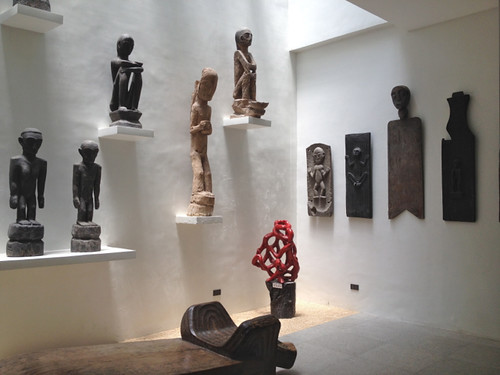
Baguio BenCab museum

My fabric search was not particularly successful but, even so, it seems impossible for me to visit the Philippines without in some way reconnecting with its craft traditions.

Wednesday, May 7, 2014

Banig: intricate patterns

I'm in the Philippines again - this time for my grandson's third birthday. Yesterday we had an excellent lunch at one of Manila's many shopping malls. At this time of the year, when Manila is at its hottest, it's easy to see the attraction of the enormous shopping malls - air conditioning! Most of the malls are so extensive that you can stroll and admire and shop and have coffee (or ice cream) as you would in a suburban shopping street. But it's cooler. Far cooler than outside.

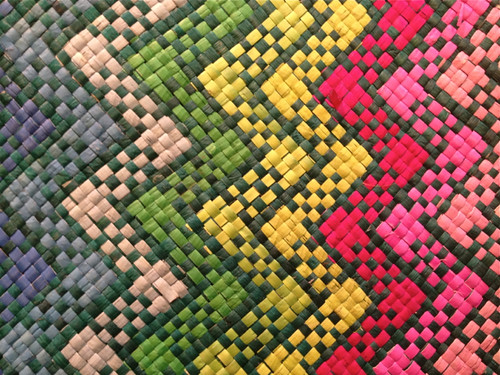
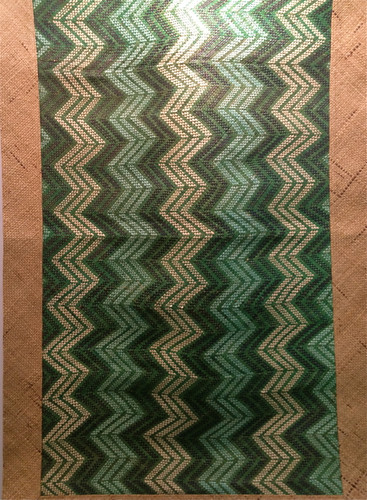
The visit to the mall had the added benefit of a small display of woven banig in its vast entrance atrium. Banig are woven from straw or grasses and traditionally functioned as sleeping mats. They still serve this purpose today, but over time banig makers have sometimes chosen to embellish their mats with colourful and intricate patterns. Nowadays they're as likely to be used for decoration as they are for sleeping.

Samar banig 1
Samar banig 4

Often the patterns are mesmerisingly geometric:

Samar banig 3
Samar banig 3 close-up

But occasionally you can be surprised by an exuberantly floral design:

Samar banig flowers

The banig in this display were from Samar, in the central Philippines. I learned that they are woven in Basey - a town renowned for the intricacy and colour of its banig weaving. The mats are made from tikog, a grass that is specially cultivated in the nearby province of Leyte. The tikog gives a sheen and pliability to these banig that makes them quite special.

I think the traditions of banig and of patchwork quilts share much in common. Both take materials that are readily to hand and otherwise without value and create useful, necessary, everyday objects. But with both these traditions the makers bring their sense of design and the desire for self-expression to the task. The results are idiosyncratic and often very beautiful.

Samar banig 2

Saturday, November 23, 2013

Textile heaven

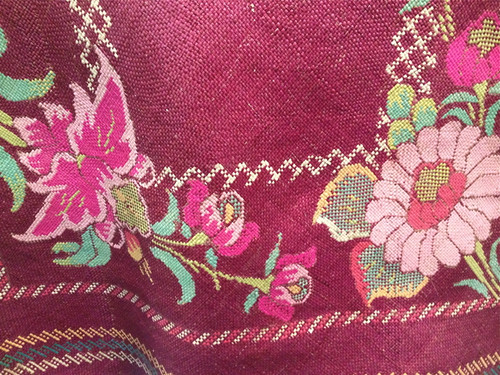
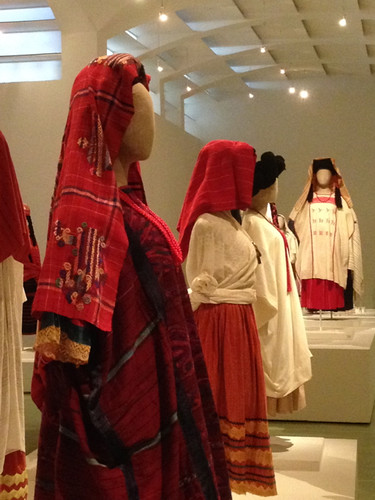
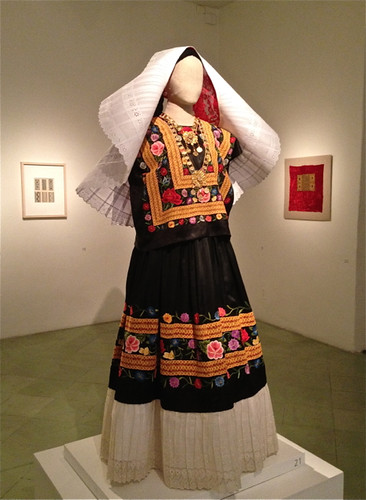
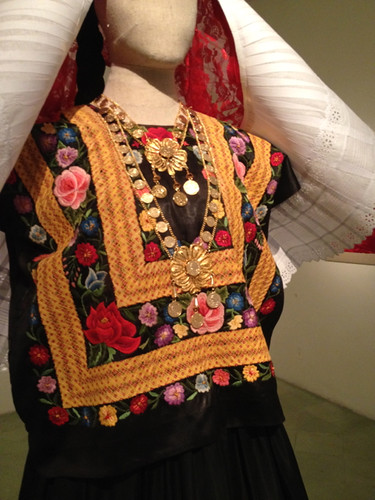
We've had almost a week in Oaxaca in the south of Mexico. Oaxaca is heaven for textile fanciers. Everywhere you turn there are beautiful textiles to lure you - people wearing them, shops and markets selling them, hawkers showing them, and museums displaying them. We began by visiting the Museo de Textil de Oaxaca to get an idea of the traditions of the region. It's a relatively small museum in an elegantly restored colonial building. Over our visit I was delighted by the way the street facades of these old buildings open to tranquil courtyard spaces - but that's another story. The museum displays only part of its collection at any one time, but displays it beautifully. There's much to examine and admire.

Textile Museum display
Textile museum black dressTextile Museum black dress close-up

All the older textiles, and many of the modern ones are hand-woven, using either backstrap or pedal looms depending on the outcome that's needed. Often the fabrics are then elaborately hand-embroidered. An earthy red colour predominates in the fabrics that originally, and still sometimes today, are dyed with cochineal - the tiny beetle that produces the deep red dye that was so desired and traded during the colonial period and brought much wealth to this area.

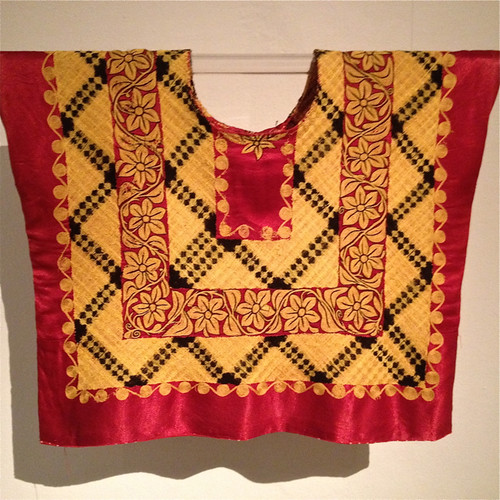
Upstairs in the museum there was an exhibition of modern huipil (the name of the simple sleeveless garment, whether short or long), still displaying exquisite hand-embroidery:

Textile Museum short huipil 1Textile Museum short huipil 2Textile Museum short huipil 4Textile Museum short huipil 3

[I bought a fine handwoven checked pink and yellow reboso - a scarf or shawl]

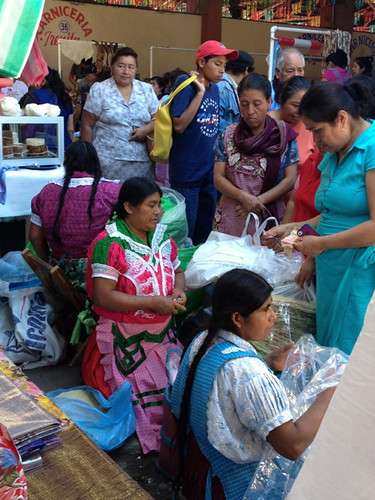
We went to a huge local market in the village of Tlacolula; the kind of market where you could have bought almost anything you wanted or needed - fruit and veg, meat and fish, hardware, underclothes, children's toys, cups of the delicious local hot chocolate (yum). Many of the women traders were dressed in local style - brightly coloured longish pleated or gathered skirts, often in shiny fabrics, a blouse with puffed sleeves and a lace collar, an apron decorated with embroidery, and a reboso. Many had their long plaits intertwined with ribbons.

Tlacolula market

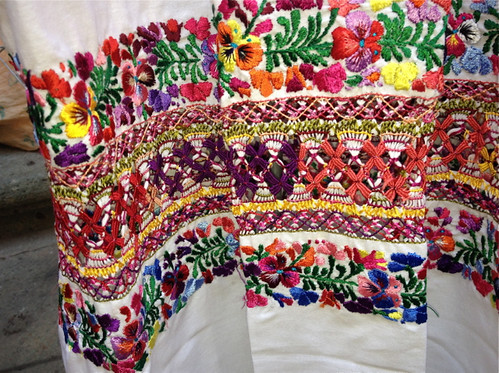
A cross-street of the market was lined with stalls selling woven and embroidered huipils, blouses and dresses. Even though the quality was not as fine as the work we saw in the Museum and the Museum shop, it was still of good quality and the riotousness and inventiveness of the colour combinations was astonishing. There were also amazing bargains to be had.

[I bought a cream calico dress with vibrant multi-coloured hand embroidery. I hope I have the courage to wear it.]

In town there are shops selling handcrafts on almost every corner - grey pottery characteristic of the area, tinware, brightly coloured wooden fantasy animals (alebrijes), and of course the woven and embroidered textiles and clothes. One day we happened upon a group of older women selling their work in the entrance to the public library. It was at another level of excellence altogether.

Embroidered huipil
Embroidered huipil 2

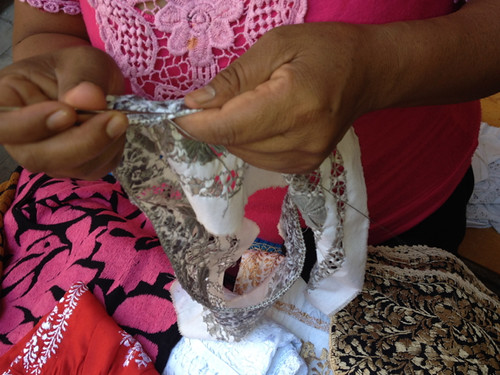
As the maker proudly pointed out, the dresses combined four techniques - the flowered embroidery, elaborate drawn-thread work, crochet borders and inserts (the red in the first picture above), and a small line of smocking, incorporating the tiniest embroidered human figures, at the join of the yoke and body of the dress. All of the women were working as they waited for customers - this woman was crocheting the neck border for a dress at extraordinary speed:

Woman crocheting

[I resisted an bought nothing for myself here. But I did buy a bright yellow dress covered in just as bright blue embroidery for my grand-daughter.]

Some of the higher end shops in town displayed their work like cameos of loveliness. Of course it helps if the store is located in a restored colonial building and you have antique furniture in which to store and display it.

Oaxaca Juana Cata shop

The shop in the photo above specialised in weaving, rather than embroidery. I was astonished at the variety of the hand-weaving techniques still practised and available for sale. Where it's appropriate, some of the fabrics are still made using back-strap looms and then the narrow strips of fabric are sewn together with decorative stitching to produce huipils or ponchos.

[I bought a hand-woven striped huipil in what are relatively subdued colours for Oaxaca. I returned the next day to buy a long skirt to go under the huipil, having been seduced by the sight of elegant women in the streets wearing this traditional combination.]

Oh, and I forgot to mention the rugs and carpets, often dyed with the natural dyes that are so characteristic of this region.

Textile heaven, indeed.

Friday, November 15, 2013

American quilts

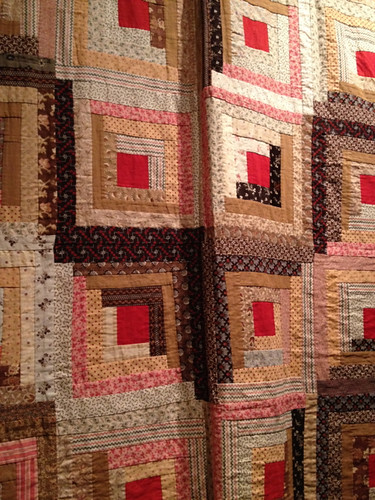
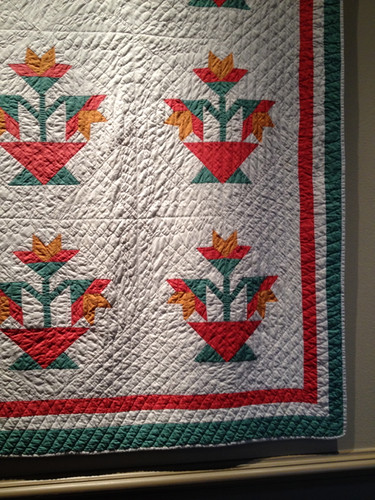
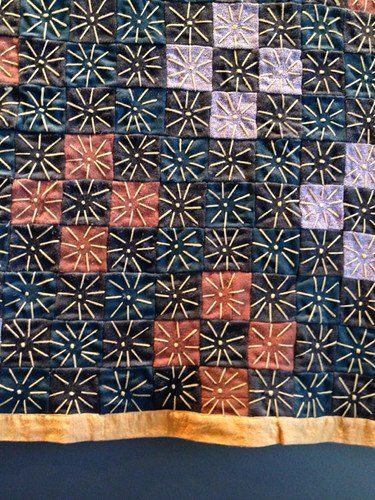
In San Antonio I stayed in the Riverwalk Vista, which I realised only after I arrived was an 'Historic Hotel of America'. It wasn't a grand hotel; in fact they called themselves an inn. The building dated from the 1880s when it had been built as a large general store. I enjoyed my stay, but what probably predisposed me most to think it was a good place to stay were the quilts that decorated the hallways and public spaces. Every time I walked along the hallway I had to stop and admire and examine and envy the quilts.

Quilt 1Quilt 3Quilt 2Quilt 4Quilt 6Quilt 5

Saturday, June 29, 2013

Quilts

QAG

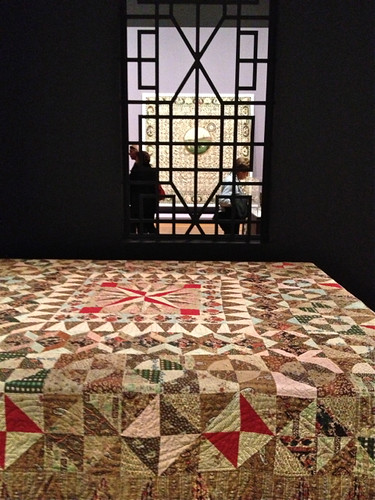
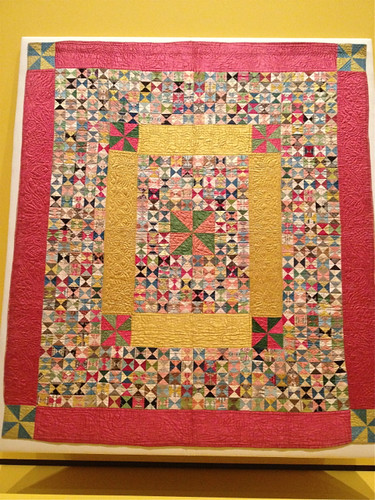
The ever-interesting Queensland Art Gallery currently has an exhibition of English quilts on loan from the Victoria and Albert Museum. The quilts date from around 1700 to 1945 and include examples of patchwork, applique, embroidery, inlay applique and quilting. The exhibition focuses on the social context of the quilts and quilt-making, rather than on techniques of construction or elegance of design. Nevertheless, many of the quilts are visually pleasing, and you can't help but marvel at the skill and patience of those - mostly women - who made them.

qag quilt exhibition

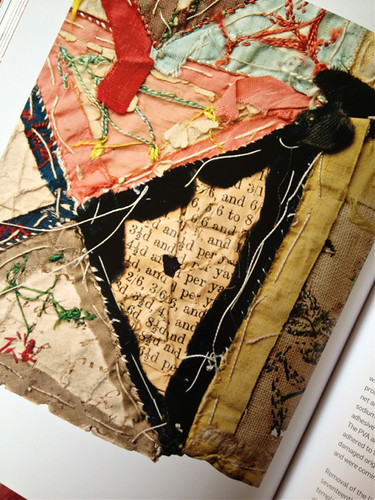
The earliest quilts are elaborate - often made from silk or velvet fabrics, or printed cottons brought back from India. They were commissioned by or constructed within wealthy households and were often associated with significant events such as births or marriages, or were gifts to patrons. The example below is reputed to have been made for the marriage of Mary Parker in 1770, though most of the silks used for the patches are ribbons dating from 1720 to 1740. Fabrics were precious and hoarded. Quilts were often re-patched, or parts of a quilt were recycled into another. The patchwork quilts from this time use the 'English' method of construction with each patch shaped around a paper template. As paper was also precious, the templates were constructed from recycled newspapers, pamphlets, records of household accounts and letters and consequently are useful in dating the quilts and setting them in their social context.

Quilted patchwork of ribbons 1770Quilt reverse side

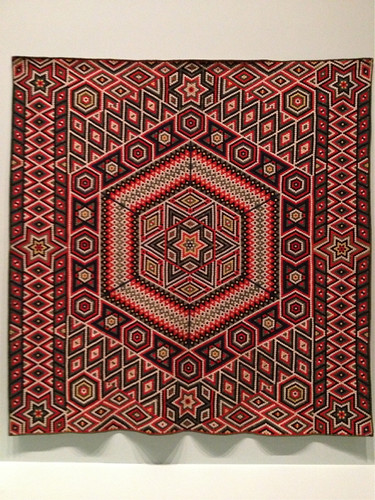
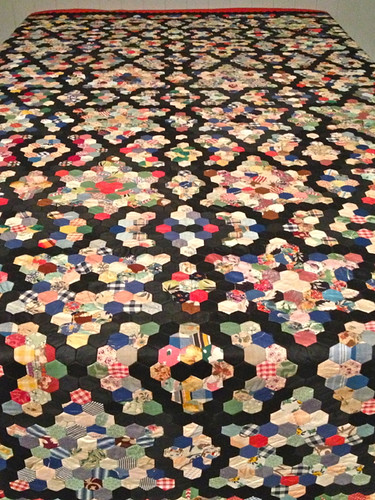
With the industrial revolution in the nineteenth century fabrics became cheaper and more readily available and quilt-making was no longer the province only of the wealthy. I was particularly taken by the curator's comments about the Victorian belief in the improving quality of patchwork and quilting - for example, the patience, diligence and skill required to make the quilts was seen as an appropriate reforming activity for female convicts. As well as the borrowings from the Victoria and Albert Museum, the exhibition includes the amazing, huge 'Rajah' quilt from the collection of the National Gallery of Australia that was made by women convicts being transported from Britain to Australia on the ship 'Rajah' in 1847. Patchwork, quilting and embroidery were also promoted as desirable activities to divert soldiers from drinking and other undesirable activities during the inevitable downtime of lengthy postings abroad. The geometrically complex and sophisticated quilt on the left below is one such quilt; constructed by a soldier or soldiers from tiny one and a half centimetre hexagons of uniform fabrics while in India around 1870.

Military quilt c1870Cover of blackout curtains 1945-7

The twentieth century quilts are, on the whole, more everyday and pragmatic, often made from scraps of fabric recycled from clothing or old curtains or furniture fabrics. The right hand quilt above, in a complex pattern of hexagons, was made in the immediate post-war period from the black-out curtains used during the war, together with fabric scraps scrounged from used clothing.

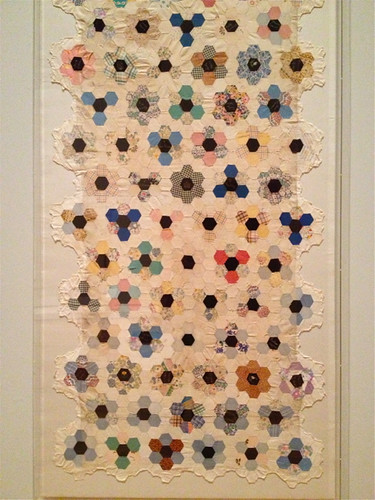
The most poignant cloth in the exhibition is incomplete. The simple hexagonal design was made by girl guides who were part of a group of British civilians imprisoned in Changi prison in Singapore during the second world war. They were making the quilt for their troupe leader when it was discovered and confiscated by the guards. You can only begin to imagine the sacrifices that must have been made to find both the materials and the time to sew the cover.

Cover made in Changi Prison

In a week when our now (sadly) former Prime Minister was being denigrated in some quarters for the supposedly frivolous and pointless pastime of knitting it was ironic to see both the popularity of this exhibition of traditional, mainly feminine crafts, and the serious and well-researched approach taken by the curators.

Wednesday, April 24, 2013

In Bruges (or Brugge or Bruggen)

I think Bruges has been near the top of my travel list ever since I've had a travel list, but for one reason or another I'd never managed to visit. Finally, I've been to Bruges.

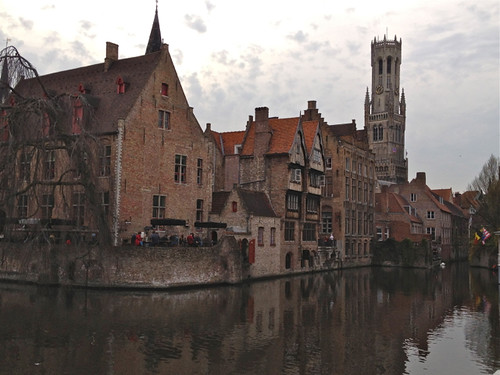
Bruges

My mental picture of Bruges was disrupted in 2008 by Martin McDonough's witty, shocking, politically incorrect film, 'In Bruges' The images of mellow brick and stone buildings, towers, spires and winding cobbled streets and squares was overlaid by the dark, threatening edginess of the film. Now I've been in Bruges myself I know that making Bruges seem grim and dangerous is probably McDonagh's greatest ironic achievement. In reality it is the city of mellow late medieval buildings and charming streets that I'd imagined. As I read somewhere (can't remember where - my brain is suffering overload) 'if Bruges didn't exist, Walt Disney would have invented it'.

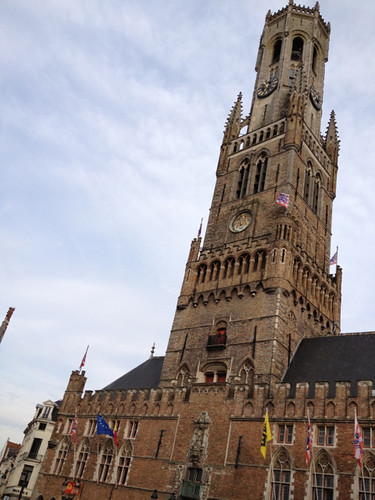
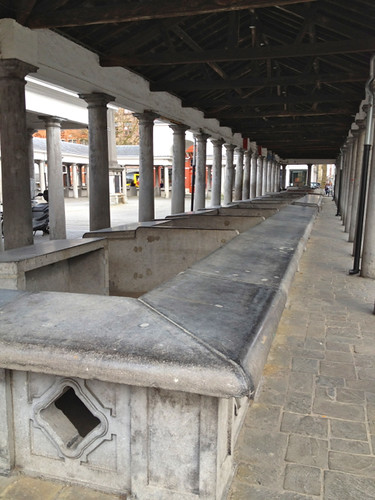
The belfry that becomes so threatening in the film presides protectingly over a square filled with tourists, cafes, horse-drawn carriages and school tour groups. The dark colonnaded building that was so menacing in the film turned out to be the nineteenth century fishmarket where fish are still sold each weekday morning.

Bruges - Belfry and Market Halls
Bruges - Fishmarket 1821

It was fun to see how Bruges had been transformed by McDonagh's black humour. Also, my appreciation of the film has increased by seeing what Bruges 'really' is like. I must watch it again.

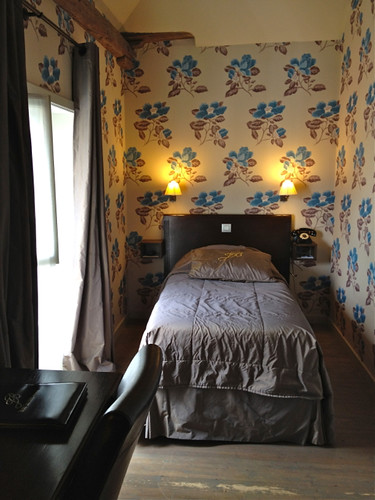
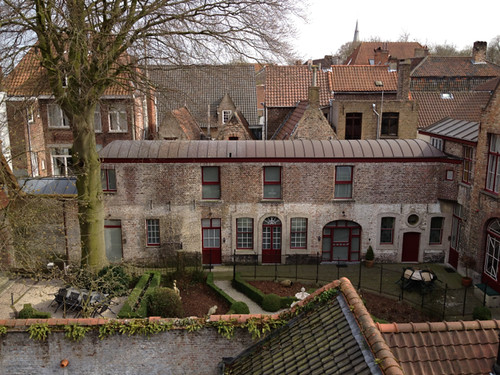
The small city is lovely. Even hordes of tourists can't undermine its charm. The hotel at which I stayed added to my enjoyment. It was a sixteenth century heritage building where I had a tiny but comfortable and perfectly equipped room that had once been part of the servant's quarters:

Bruges - hotel room

This was the view from my room:

Bruges - view from hotel window

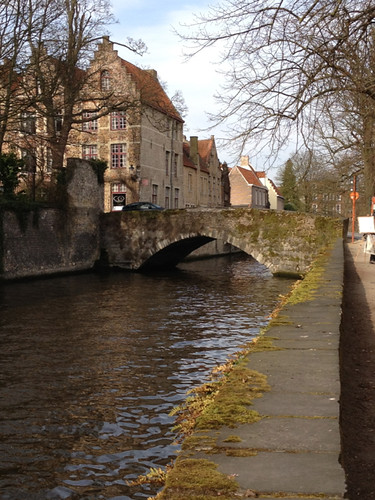
and this was the canal just around the corner from the hotel:

Bruges bridge

Near the centre of town there are, inevitably, many souvenir and tourist-oriented shops. And the main souvenirs? Chocolate and lace. I've been seduced away from chocolate by Dutch preferences for marzipan and caramel flavours, but I was interested in the lace. I'd been warned that most of the lace in the shops is now mass-produced - and that most of it is sourced from China. This makes rather sad sense. Few tourists would be willing to pay anything like the real cost of producing handmade lace. But I had read of a lace museum and of a shop attached to the museum so I meandered through what I imagine are the back streets of Bruges to find the museum. Any walk through Bruges is lovely, except for the impact on your feet from the cobbles.

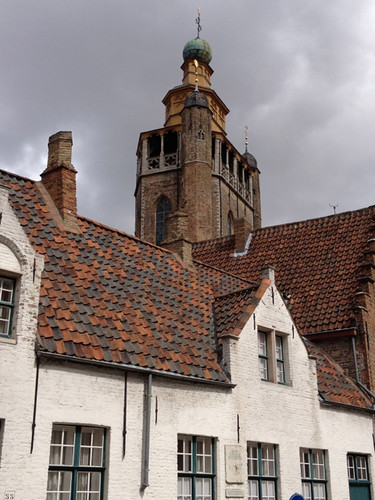
Bruges - Jeruzalemkerk tower

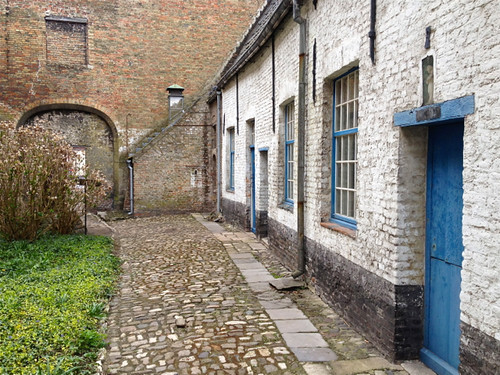
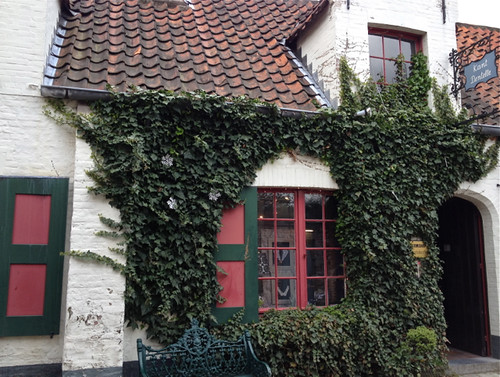
The museum building and its setting were charmingly low-key. You buy a ticket for 3 euros and it gives you entry to the rather gloomy fifteenth century Jerusalem Church, in whose outbuildings the museum is located, to the museum itself and to a demonstration of lace-making. A miscellaneous job-lot. This is the outside of the unpretentious museum:

Bruges - Lace Museum

Most of the lace in the beautifully plain rooms of the museum is exquisite - fine, unique designs, astonishing craft. Unfortunately, the labeling is most inadequate (even worse if your Flemish is as undeveloped as mine) and provides little guidance as to the history or techniques of the pieces. You just have to admire them as objects. I so enjoyed watching the demonstration of lace-making, which was really just three women making lace and chatting to one another as if it was their weekly get-together.

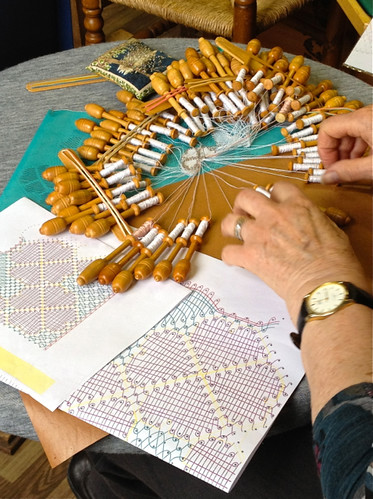
Bruges - bobbin lace making

They were clearly very very skilled, but it was good to see them get distracted from time to time by the conversation and have to unpick a few rows (or whatever the bits fastened by pins are called in lace-making). I was directed to a shop, called 't Apostelientje, up the cobbled lane beside the church.

Bruges - lace shop exterior

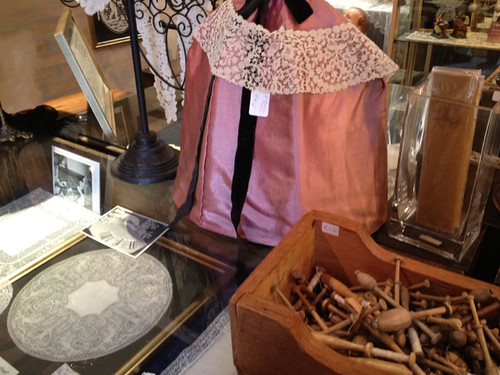
I'm still not sure if it was officially the museum shop, but it was crammed with pieces of hand-made lace - collars, handkerchiefs, tablecloths and napkins, doilies - both antique and modern, as well as all the bobbins, threads, patterns and other materials you need for lace-making.

Bruges - ‘t Apostelientje, on Balstraat.

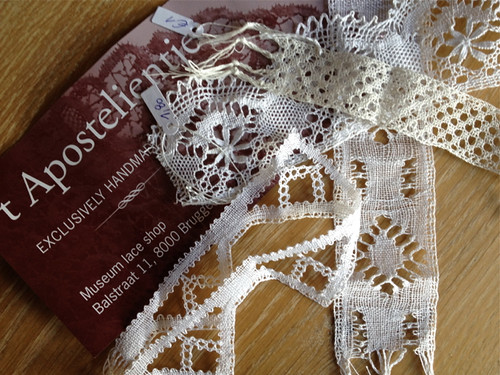
I can't imagine I would ever want to make bobbin-lace, but I was overcome with admiration for the traditions and skill involved in this form of textile production. And even if I could have afforded it, I wouldn't have bought any of the lovely pieces in the shop as they are part of a life I don't live. But I couldn't resist buying some small scraps and samples of lace just so I could have examples of the craft.

Bruges - lace scraps

Bruges (or Brugge or Bruggen) is still on my travel list. I want to visit again.

Wednesday, January 23, 2013

New for old

For some time now - maybe a couple of years - I've been reading, and admiring, the Spirit Cloth blog. Its author is US textile artist Jude Hill who describes herself in this way:
My style is based on layers, the nature of cloth, redefining traditional techniques, unconventional cloth construction, mending and the relationship of sewing to weaving. I call myself an alternative quilter and a folk artist (if I have to use the word artist)
Jude Hill uses recycled textiles and her work has a patina of age and past histories.I like her refusal to be pigeon-holed by craft categories - 'weaving', 'patchwork' or 'embroidery' and her 'what if' approach to her work. Spirit Cloth is an extreme example of process-driven craft.

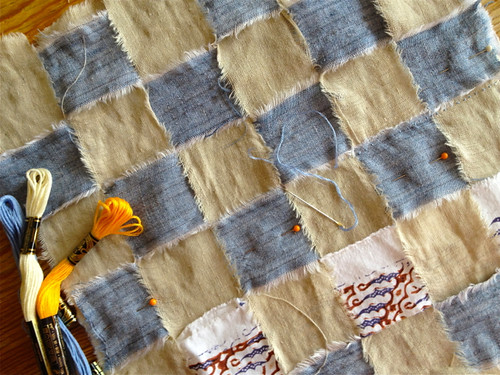
Over time there's been a very positive response to her work and she now offers on-line classes for some of her techniques. I've just taken up her class on cloth-to-cloth weaving which is one of her ways of working that delights me. She uses strips of textiles, mainly torn or roughly cut, to weave smallish blocks that can then be combined with other similar blocks to make quilts or table pieces or simply left as they are. The woven bases are embellished with further layers of woven cloth, applique, stitching or quilting. It's not a craft that rates highly on producing a useful outcome but, as I've already mentioned, the process is engaging.

I've been working on the base for my first block:

Rag cloth 1

Jude Hill's use of recycled textiles comes from a deeply held anti-consumerist philosophy. While I admire her stance, I live my life differently. But I like the soft, worn quality of used textiles and I've always found it difficult to throw away clothes I've worn out - particularly when I've loved the fabrics. So, my block so far is made from the remnants of two old pairs of linen pants worn to holes, a stained and torn batik cloth I've had for decades, and backed by an old sheet from my mothers's house - torn, but saved because of its hem-stitched edging. I'll soon run out of fabrics I can recycle, so I imagine that if this interest continues I'll be visiting second-hand shops for suitable scraps.

Let's see where this takes me.

For my knitting friends - don't fear this means an abandonment of knitting. My Sempervivum shawl is currently blocking and I've just cast on for a new cardigan for my grand-daughter. I just have more time to fill with such activities than I used to have.

Sunday, June 24, 2012

Loving Love Lace

I've been to see the Love Lace exhibition at Sydney's Powerhouse Museum with some friends. We'd been planning this for ages, and finally managed to organise ourselves. It's wonderful. As knitters, my friends and I are attracted by lace. In my own case, I'm particularly attracted by its links to long-established craft traditions and by the use of motifs passed on from generation to generation of crafters.

This exhibition takes the idea of lace and plays with it. It looks forward, much more than it draws on past traditions. I like the way the curator describes the idea behind the display:
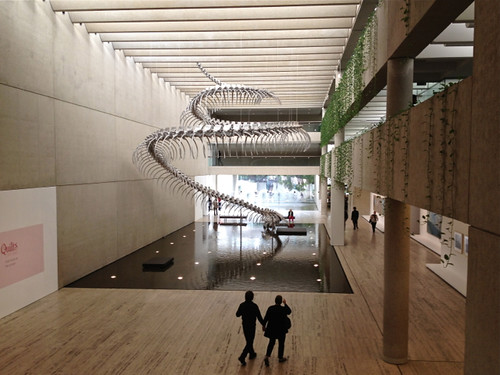
'Lace offers the mystery of concealment and the subtle interplay of space, light and shadows'.

Even though lace is usually associated with textiles, this exhibition broadened the definition to include
'any openwork structure whose pattern of spaces is as important as the solid areas’.
As result, the exhibition includes ceramics, glass, wood, found materials, video and images, paper, jewellery - all kinds of media in addition to the expected textiles.
Despite the diversity and innovation I was still most engaged by the fabrics in the exhibition. These are some of my favourites:
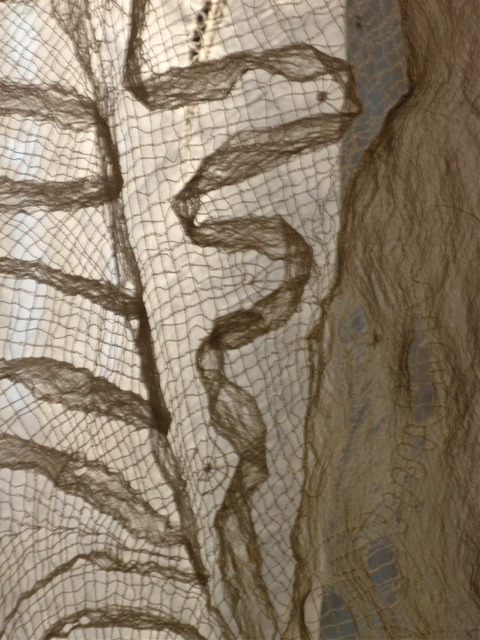
Below is a detail from a grouping of maybe a dozen ceiling to floor hangings in a mixture of tapa (bark) cloth, interlining, cotton gauze and thread. The artist, Andrea Eimke, who now lives in the Cook Islands but originally came from Germany, seems to me to combine successfully two very strong traditions of weaving, applique and stitching.

Love Lace - tapa

I found this work - a ghostly grouping of six dresses and bonnets - very moving. The Canadian artist, Noelle Hamlyn, calls it 'Ceremony' and it evokes for me the importance of rituals associated with birth and childhood. The work has been constructed from stitched and embroidered Japanese gampi tissue paper and so has an appropriate delicacy and transience.

Love Lace- dresses and hats

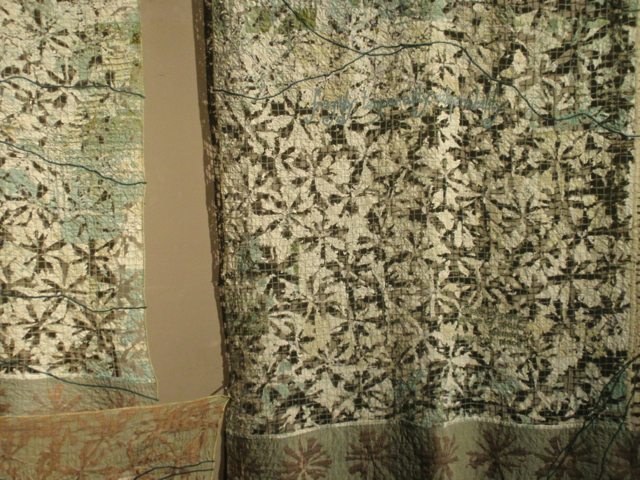
My favourite piece in the exhibition was a series of hanging panels of layered fabric with dyeing and stitching and patterning by Australian artist Janie Matthews. The gradations of colour and intricacy of the fabric design resulted in great richness. Meandering lines of stitching travelled across the panels, linking them. Most appropriately, its title was 'Memory Maps'.

Love lace - fabricLove Lace - fabric 2

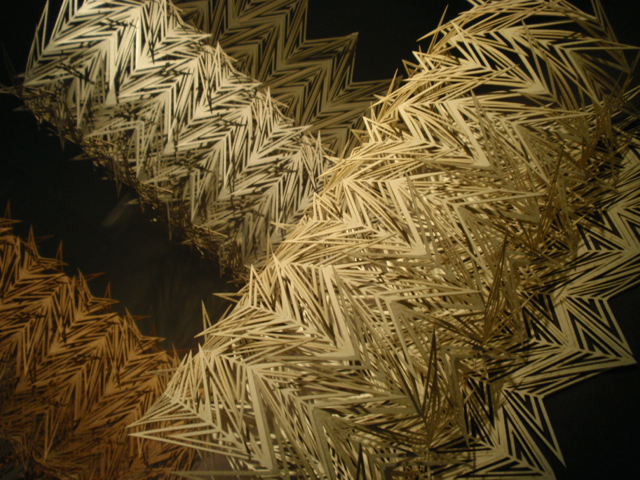
There were some beautiful paper works. This laser-cut work from paper was by Tomy Ka Chun Leung, a student at UTS, the university where I work. These pieces are simultaneously simple in overall shape, but with a busy detailed pattern. This is a wonderful example of the 'interplay of space, light and shadows', as intended by the exhibition.

Love Lace - cut paper.

The exhibition and its works have a well-curated website if you're interested in seeing more of the works. Better still, visit if you can.