Showing posts with label flowers. Show all posts

Thursday, March 12, 2015

Things, stuff, collections

I'm travelling again. At present I'm in London where a house swap has provided me with a month's stay in a very swish apartment in Royal Docks. I like to travel because I like the glimpses it gives of other ways of living; other ways of constructing the everyday. Things, stuff, collections, what is more formally defined as material culture, are wonderful illustrations of ways of living. There are certain museums I like because they provide these kinds of insights into people's lives. I've been lucky enough to find some of them on this visit.

The Geffrye Museum in London's rapidly gentrifying east end, is one such treasure.
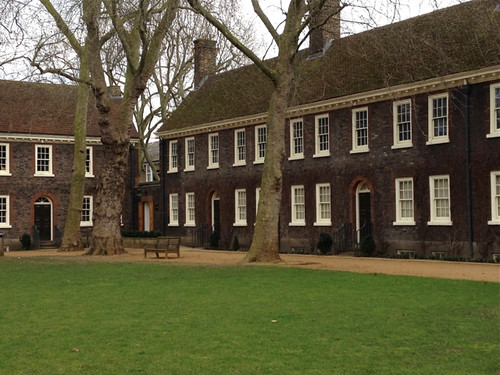
Geffrye Museum exterior

It's a simple, but very lovely 18th century building that was built as an almshouse. It's quite narrow as it originally was a series of independent dwellings - like a long terrace. But now all the interiors have been joined together so there's an enfilade through the building with a series of rooms opening off the hall.
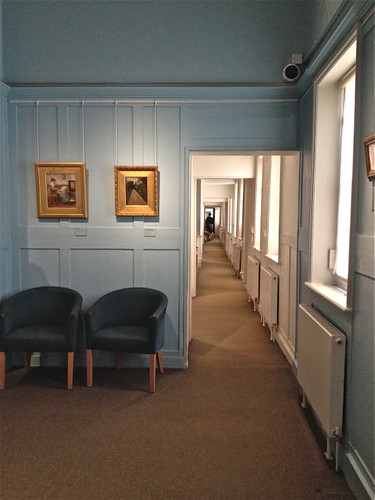
Geffrye Museum interior

And the 'rooms' are just that - reconstructed living rooms that provide glimpses of how the 'middling sort' (the middle classes) lived from Tudor times to the late twentieth century:

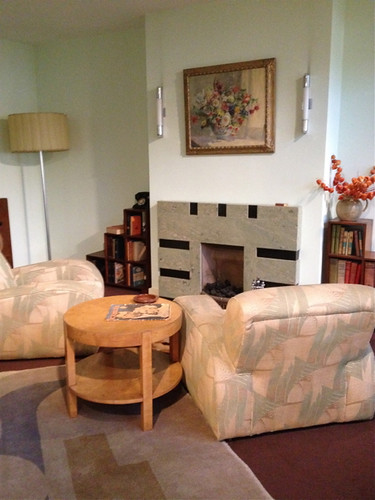
Geffrye Museum 1790sGeffrye 1930s

The rooms above are representative of the late eighteenth century and the 1930s. As I child, I grew up with a living room in the style of the 1930s room above, even though it was the 1950s. Perhaps that says something about 'style' in Australia? I still use my parents' living room chairs from that period, though they've been reupholstered several times. Unlike many of the better-known museums the Geffrye had relatively few visitors other than a couple of school groups, so I could linger and wonder over the exhibits.

I also visited the museum exhibition that must thrill the heart of every collector or hoarder:
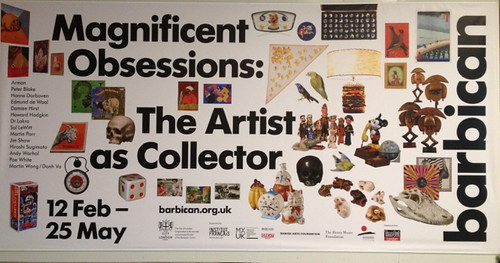
Magnificent Obsessions

This exhibition, of artists' collections of objects, was fascinating. The great temptation is to believe that the objects give you insights to the artists' work. I can't help but wonder just how these collections are stored and displayed in people's houses. Who dusts them? Are they regularly rearranged? Are they cataloged? Are they loved, or is the thrill in their acquisition? The exhibition raises lots of interesting questions - most centrally, when does 'stuff' become 'art'? Some of the collections, like that of Hanne Darboven, are wonderfully random, with objects of different kinds and different sizes crammed together. Others, like Sol Le Witt's collection of photographs are precisely ordered and displayed. Still others have a double level of obsession where one artist, Danh Vo, has curated, ordered and displayed the collection of another artist, Martin Wong:
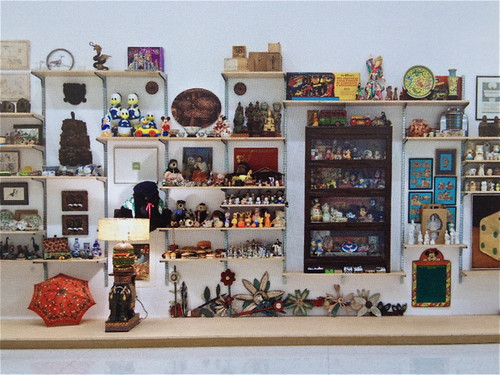
Mag Obs Wong

Possibly my favourite of the many wonderful collections was Pae White's collection of scarves by prolific mid-twentieth century fabric designer Vera Neumann.
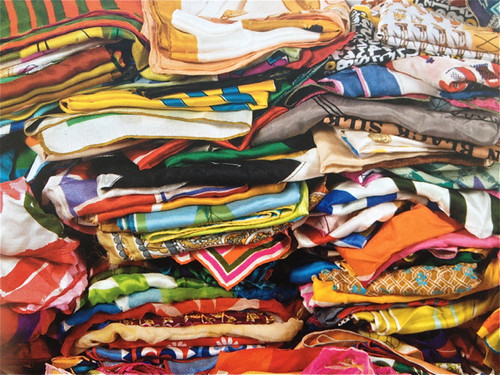
Mag Obs scarves

I'm not sure what engaged me most - the extraordinary range of Neumann's scarf designs or Pae White's persistence in finding and gathering the scarves. Either way, I can't help being fascinated by such obsessiveness.

It's not a museum in the usual sense, but I imagine Kew Gardens must be one of the world's best collections of plants. Wikipedia tells me it is the world's largest collection of living plants. There are thousands upon thousands of species of trees and plants which (at least to me) reflect Britain's history of travel, exploration and colonisation. The beautiful Palm House with its specimens from many more tropical countries is a particular example of collecting and curating:
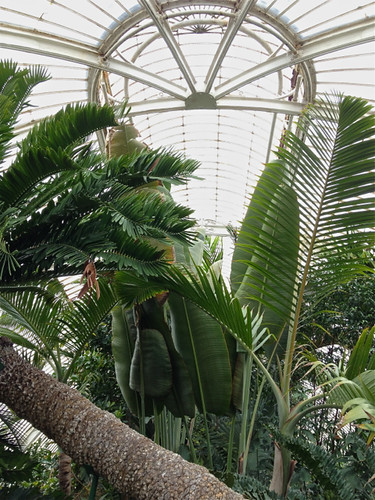
Kew Gardens palm house

The gardens also reflect the British obsession with gardening and landscaping. We were a month too early for the renowned display of bluebells, and just a couple of weeks too early for the grand display of daffodils, though some early bloomings were a sign of the splendour to come:
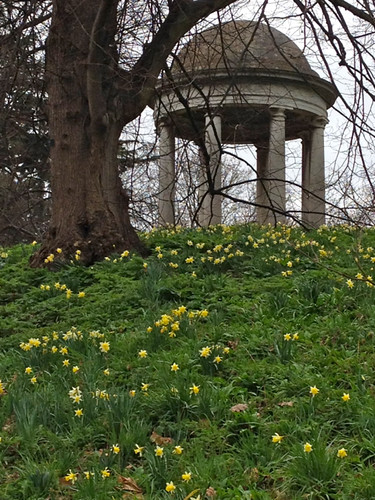
Kew Gardens folly and daffodils

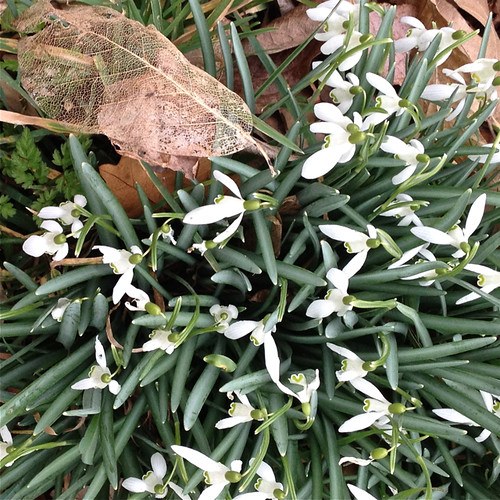
However, we were just in time for the display of crocuses and the occasional quiet snowdrops:
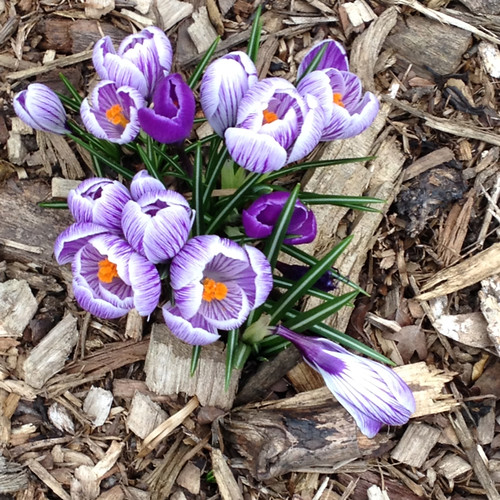
Kew Gardens crocuses
Kew Gardens snowdrops

Now I think about it, being a tourist is just another form of collecting, and museums are convenient ways of curating experiences for tourists - though of course they have other functions. I'll continue to blog about the experiences I collect - though I'm only too aware that I have been a much less dutiful travel blogger on this trip than I have been previously.

Saturday, April 27, 2013

More tulips - and daffodils and hyacinths

I've been dithering about when to visit the Keukenhof gardens outside Amsterdam. The gardens are world-famous for their Spring display of tulips but as winter has been longer and colder than usual the tulips are flowering later than usual. There doesn't seem to be a 'state of the tulips' advice site (or if there is I haven't found it) to guide me in choosing the best time to visit so it's all been a bit of a punt.

Eventually I chose to visit on Wednesday this week which fortuitously was the warmest day there has so far been this year. Next week is my last week in Amsterdam and is a week of holidays and celebration for the installation of the new king, so I tried to avoid that week as I imagine there'll be lots of tourists and even locals making excursions around Amsterdam. (By the way, my Dutch friend Mieke tells me Keukenhof is just for the tourists, but that's OK because I'm a tourist).

I loved Keukenhof, though my visit was a lesson in limiting what you desire. Most of the millions of tulips are still in bud and I found myself thinking 'if only I'd waited another week or so'. But this week was the peak period for the daffodils and hyacinths and they would not have been so splendid next week. And anyway, by the end of the day even my tulip desires were satiated. What I found most wonderful about the gardens was the sense of abundance. The planting is dense and generous.

The hyacinths seemed very luxurious. Their scent was intoxicating:

Keukenhof - path
Kukenhof - multi-coloured hyacinths

The daffodils were often planted in beautifully neat lines and defined and divided spaces:

Keukenhof - coral trumpet daffodils
Keukenhof - daffodil border

And even though there are many more tulips to come, how could they be more beautiful?

Keukenhof - frilled white tulipssKeukenhof - white yellow tulips

There were splendid massed displays of a single type of flower, but some of my favourite garden beds were those that combined different flowers. Not subtle, but wonderful:

Keukenhof - orange tulips grape hyacinthsKeukenhof - hyacinths and yellow tulips

Keukenhof has something for everyone. There are majestic trees just covered in a haze of green from their new Spring leaves, winding paths, neatly aligned geometric gardens, trees covered in blossom, lakes, bridges, fountains, sculptures and, miraculously, given the crowds, lots of benches on which to rest and just contemplate the flowers.

Keukenhof - yellow & red tulip bed

Wednesday, April 17, 2013

Warning - tulips!

I think I'm even more besotted with the tulips in Amsterdam than I was with the orchids in Singapore. On yesterday's visit to the Rijksmuseum I walked along a path that was lined with big tubs of blowsy, healthy, colourful tulips.

Tulips - path to Reijksmuseum

Winter this year in northern Europe has been cold and long. People are yearning for Spring and the tulips - blooming much later this year than usual - are Amsterdam's symbol of the season's change.

Tulips - deep purpleTulips - peachTulips - yellow:orangeTulips - mauve

They're not the most subtle of flowers, but I can appreciate how the mania for them almost ruined the economy of the Netherlands in the seventeenth century. I discovered this 1634 painting by Hans Bollongier in the Rijksmuseum with the same tulips that are in the foreground of my first photo in this post.

Hans Bollongier 'Floral Still Life' 1639

Some passions endure.

Tuesday, March 26, 2013

One day in Singapore

I'm travelling again. I've just made my way to Amsterdam via Singapore. For readers of my blog I'm sure it's now very clear that I love to travel. I'm not sure why this is. I used to assume that everybody loved to travel and that it was lack of opportunity that prevented some people from doing so. But over time I've discovered that not everybody likes to be 'elsewhere' as much as I do. I like the way you can't take things - customs, ways of doing things - for granted when you're not at home. I like speculating on why things are the way they are and what impact that has on people's lives. And I like just looking at places - at the patterns and colours and and the way they are brought together in the natural or cultivated landscape.

So, I've just arrived in Amsterdam, where I've swapped houses for month or so. When I booked my air ticket I was unsure how well I'd cope with a long flight after my hip replacement, so I organised a one-day stop-over in Singapore. Over the years I've been very rude about Singapore, describing it as boring and too clean. Really, I should have known better. One of my implicit travel rules is that almost any experience can be interesting for the traveller - you just have to look and wonder.

I had only a long day to spend in Singapore and was unsure how much I would be able to manage with my more limited mobility. Many years ago I had visited the Botanic Gardens in Singapore and had memories of the wonders of the orchids there. So, relatively early because of the heat, I went to the Gardens. They were already buzzing with activity. People out for early morning walks, joggers, parents with children with bikes and tricycles, families already setting out picnics under shady trees and tai chi practitioners. When space is at a premium, as it is in Singapore, such gardens are greatly valued and, in this case, beautifully cultivated and maintained.

The orchid garden within the Botanic Gardens is exquisite. The display of the orchids against densely arranged, varied tropical plantings, as well as the blooms themselves, is wondrous.

Singapore Orchid Garden - 
display

The paths meander and at every corner there seems to be a new bank of unexpected colour and patterns. Some of the paths had arches of tiny yellow and brown orchids, and there were periodic bowers of dense vegetation for shelter from the sun.

Singapore Orchid Gardem archways

I took many photographs. I've chosen those below almost at random because all of the orchids were so lovely. Some orchids were tiny - others (not my favourites) were fleshily huge and gaudy. Orchids know how to combine colours unexpectedly. I was particularly struck by the mauve and brown combinations - perhaps inspiration for a striped shawl?

Singapore Orchid Garden 7Singpore Orchid Garden 4Singapore Orchid Garden 5Singapore Orchid Garden 6

By about 11.00am it was too hot to continue in the Gardens. After a rest I took a trip on a 'hop-on hop-off' bus to have an air-conditioned sit-down glimpse of other Singapore sights. I hopped off in Chinatown and spent a leisurely afternoon exploring its streets. I thought it was odd that Singapore would have a 'Chinatown', given that more than 70% of the country's population is Chinese. But a visit to the Chinatown Heritage Centre explained that oddity and provided lots of food for thought. Singapore's rapid development over the last fifty years or so brought equally rapid destruction of old streets and buildings for new offices, improved housing and commercial buildings. About twenty years ago it was realised that there was merit - commercial and cultural - in the preservation of some of Singapore's past. Today's Chinatown preserves some of the streetscapes of the past.

Singapore Chinatown

The Heritage Centre is one of those museums that tries to give a sense of the past through replicas of past living conditions and through the recorded testimonies of individuals who lived and worked in what is today's Chinatown. Singapore is a city of immigrants and their descendants. In the late nineteenth century desperately poor Chinese people risked the little they had and severed their family connections to travel from southern China to then Nanyang where it was believed colonial development offered opportunities for work and improvement. Work was mainly hard and physical and living conditions were dire. One of the more touching testimonies was from an old woman who, even in the 1950's, worked long days as a construction labourer, carrying construction materials and rubble in baskets. The Centre recreates the conditions of people living and working in the old shophouses of the city around the 1950s. The building in which the Centre is housed had businesses on the ground floor, and up to twenty families crammed into small spaces on the two floors above. The Heritage Centre presents the conditions of 'cubicle' living in painstaking detail - the kitchen and single pan toilet

Singapore Chinatown Heritage Museum - kitchen

the combined living / sleeping spaces

Singapore Heritage Centre - bedroom

and the dark, cramped hallway that also served as storage space

Singapore Chinatown Heritage Museum

One of the businesses housed in the building was a tailor, and the shop and cramped working quarters of the 1950s were faithfully depicted. Again, the delight was in the detail:

Singapore Chinese Heritage Museum - tailor's shopSingapore Chinese Heritage Museum - sewing machineSingapore Chinatown Heritage Museum - threads

I spent ages in the Heritage Centre. It's reminded me that the Singapore of high rise developments, international label shopping and law-abiding cleanliness is a recent phenomenon and is the result of hard, often exploited work by many immigrants who are now its citizens. As recently as sixty years ago things were very different. My visit to the Centre was topped off by eating in the small traditional restaurant at its entrance - rich sweet/spicy/soy noodles with prawns and vegetables. Yum.

Singapore cafe

I suspect and hope that I won't be repeating my glib, dismissive statements about boring Singapore.